Autonomous & Port Charging

Megawatts. Unmanned. Around the clock.

MCS-ready high-power charging for ports, automated logistics hubs, and industrial sites. Automated connection systems and 24/7 unmanned operation — no driver intervention required.
Ports and logistics hubs can't wait for drivers to plug in.

Automated port vehicles, autonomous yard trucks, and robotic logistics systems operate continuously without human operators. Standard EV charging assumes a driver — but the future of port and industrial transport doesn't. Sites need multi-megawatt capacity, automated connection, and software that integrates with yard management and TMS systems without manual steps.

  • Autonomous vehicles operate 24/7 — no downtime windows for manual charging
  • Multi-MW site demand requires HV-direct connection and active grid management
  • EU AFIR mandates TEN-T port charging by 2030 — planning must begin now
  • Mixed fleets: yard trucks, reach stackers, forklifts — each with different power requirements

Ground-level. Overhead. Megawatt-direct.
Every connection type covered.

From in-ground automated connectors for yard trucks to pantograph bus charging and MCS for heavy haulage, Neutron delivers the full autonomous charging stack — hardware, software, and grid integration.

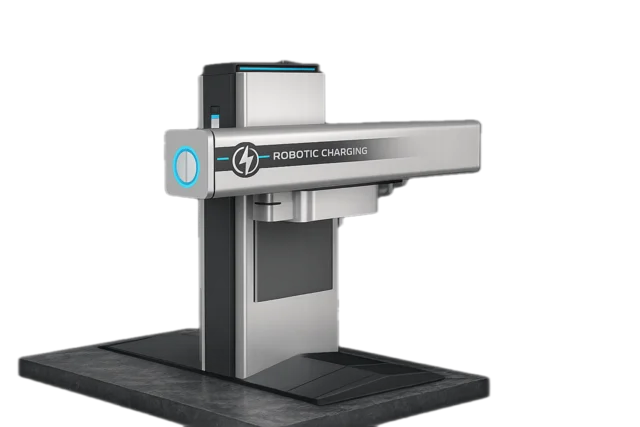
Automated autonomous EV charging unit
Automated Unit
Unattended Autonomous Charging

Connects and charges without human intervention. IP65 sealed, rated for 1,600 A VDC. Activated by vehicle transponder — zero human involvement required.

Industrial solutions
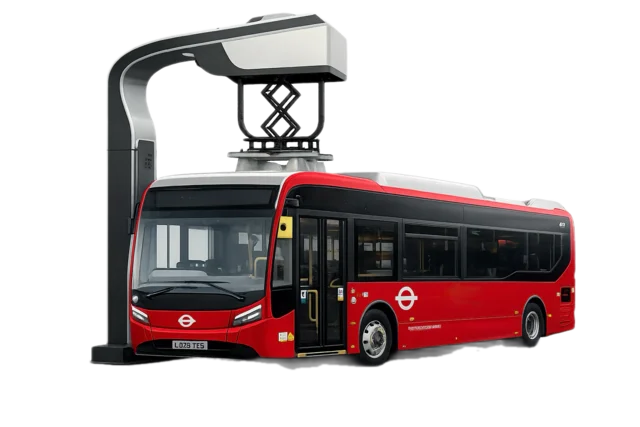
Overhead pantograph charging for electric bus
Overhead System
Pantograph Charging

Automated roof-mounted pantograph for electric buses and large commercial vehicles. OppCharge standard compliant, up to 600 kW per connection. Suitable for both depot slow-charging and en-route opportunity charging.

Pantograph
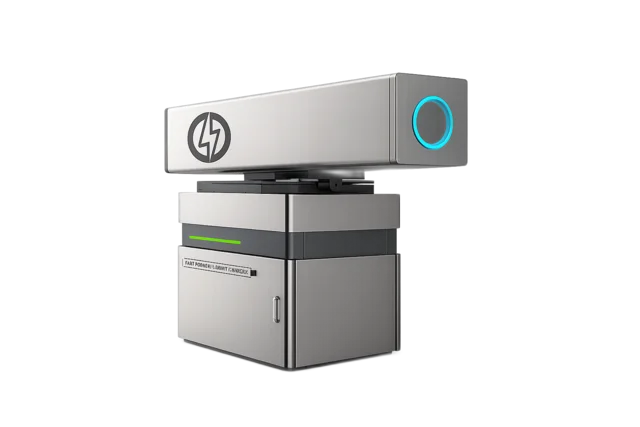
MCS Direct robotic charging unit
MCS Direct
Ultra-Fast Megawatt Charging

Adopting Megawatt Charging System (MCS) technology, it delivers ultra-high current output up to 1,600 A with a maximum power of 1,600 kW — more than 6× faster than a conventional 250 A interface. Up to 1.65 MW per port via ISO 15118-20. Liquid-cooled MCS cable for safe high-current delivery. Designed for heavy-duty trucks, port equipment, and large-format commercial vehicles.

View MCS systems

Yard management meets
energy management.

Electron CMS integrates with your yard management system (YMS) or TMS via open APIs. As vehicles complete tasks, the system automatically dispatches them to the optimal charging bay, calculates required top-up time, and sequences charging to stay within grid capacity — with no human scheduling required.

  • YMS / TMS API integration — vehicle dispatch triggers automatic charging sequence
  • Multi-MW demand management — DNO cap enforcement across all charging points
  • Real-time asset health monitoring — predictive maintenance alerts per charger
  • AFIR-compliant data reporting for EU TEN-T mandates

From DNO connection to charging bay — fully engineered.

Multi-MW port charging requires more than charger hardware. Neutron designs and delivers the complete HV infrastructure: DNO HV connection, on-site substations, switchgear, BESS for peak shaving, and the HV-direct charging link — all under a single engineering contract.

  • 11 kV / 33 kV DNO connection design and application management
  • Prefabricated substation and LV/MV switchgear supply
  • BESS integration for grid peak shaving and resilience
  • Single-contract delivery from HV connection to commissioning

MCS. AFIR. TEN-T. ISO 15118.

Neutron autonomous charging systems meet the full stack of international standards for high-power, automated EV charging infrastructure.

MCS Standard
ISO 15118-20 MCS
Up to 1.65 MW / 1500 V DC
Liquid-cooled MCS connector
EU Regulation
AFIR 2023 compliant
TEN-T port obligation ready
Clean Vehicles Directive
Grid & Safety
G99 DNO approved
IEC 61851-23 (DC charging)
UKCA / CE certified
Communication
ISO 15118 Plug & Charge
OCPP 2.0.1
OCPI 2.2.1 roaming
Automation
OppCharge pantograph
IP68 ground connector
RFID / transponder activation
Environmental
IP54 minimum (IP68 in-ground)
IK10 vandal resistant
Operating: –30 °C to +55 °C

From feasibility to first charge in 20 weeks.

High-power autonomous charging requires extensive HV infrastructure. Neutron manages the complete programme — from DNO HV connection through system integration and commissioning.

Week 1–3
Feasibility & Design
Site survey, vehicle fleet audit, HV connection feasibility, substation sizing, and MCS/automation system specification.
Week 4–10
DNO & Planning
DNO G99 / HV connection application, planning consents, procurement of substation, switchgear, and charging hardware.
Week 11–17
Civil & HV Works
Substation installation, HV cable route, in-ground connector civil works, and overhead pantograph gantry installation.
Week 18–20
Integration & Go Live
YMS / TMS API integration, Electron CMS commissioning, automated connection testing, and full operational handover.

Planning a port or autonomous depot?

Our HV and automation engineering team will assess your site, model the HV infrastructure, and produce a feasibility report at no cost.

Request a feasibility study HV Direct & MCS products

Let's talk.

Product enquiries, project scoping, and partnership opportunities. Our engineering team responds within one business day.

Email
info@neutron-systems.com
Address

9 Mallow Street, London, EC1Y 8RQ
United Kingdom

Follow us